Tuesday, 9 October 2012

1964 Maserati 151/3

I've been obsessed with these images for years. 
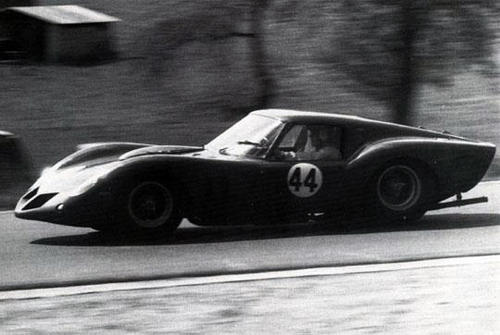
They were shot in the paddock of the 1964 Le Mans. The incredible contour line of the car, the brutal bare metal effect, the slightly underexposed picture and the "homely" feeling of the paddock wrap together all the best emotions I can get from researching the history of classic cars. 
The Maserati 151/3 has got an extra value. It represent the ultimate, loud and romantic failure. It carried on its shoulders the expectations of 10 years of close calls and isolated glories for the marque. Arguably this particular car - chassis 151.002 - will take all these hopes away with it on the 10th of April 1965, Le Mans Test day.
Lloyd Casner was pushing the car hard after a couple of warm up laps. The car must have been very close to its top speed of 198mph when approaching the "hunaudieres"'s bump, a particularly tricky bit. Cars were usually going slightly airborne at the time and with all four wheels off the ground, the only way to avoid disaster was to tap the brakes to point down the nose and partially lift off the throttle, trying to maintain the perfect speed at the rear wheels for the contact with the tarmac. Casner might have lifted off completely, according to Maurice Trintignant, but he will never be able to tell his side of the story. The car barrel rolled out of the track taking two trees with it. It was the horrible end for car and driver. Its engine would have been recovered and fitted to a mid engined prototype, the Maserati Tipo 154 (or Tipo 65) and tried again, in less than a month at 24 Heures. But Jo Siffert crashed it in the effort of keeping up with the Fords and it was the very end of Maserati at Le Mans.
The 151 project always had it an yet never stood a chance, a great design that didn't benefit from the necessary testing but still developed effortlessly. Only a handful of chassis were ever created and we owe much of this story to Johnny Simone, who ordered .002. Two more sister cars were sent to Briggs Cunningham in the USA where they would have been raced much more often than the European counterpart. Changes in regulations stopped and restarted the development of the engine that started as 4 liter V8 and would raise to 5 liter with a development up to 5.2. But it wasn't a good time for Maserati that didn't have money to invest in proper development even after having graced the world in the fifties with the 450 and the notorious Tipo 61 birdcage.
The 151 would be competing Le Mans in '62, '63, '64 and for the last fatal time at the testing in '65. They always stood a chance and quite often had the honour of leading the race. But lack of testing and factory development would curse the car. Gearbox failure, electrical failure, stuck throttle, alternator, battery and brakes showed up in one race or another, but the worse problem was possibly the useless De Dion suspension that was causing the internal rear wheel to toe in, literally eating the tires. The car would have to live with this issue until the winter of '63/'64 when one of the last upgrades turn the 151/1 into the 151/3. The car would receive extended track and wheelbase and a diet that took the weight from 975 to 940kg. The upgraded 5.0 V8 with its excess of 430 bhp and the new Drogo body would have been good enough to grasp 200mph (198 recorded). This last development is the shape in the pictures on top of this post. The amazing line gently wraps the front arches so tight that they would have to be hammered away in the pits. The extreme rear Kamm offered space only for a small vertical rear window. The scrutineers wouldn't like that during '64 test day and this would have to be enlarged with a flat, almost horizontal, roof window. These are just some examples of how little testing the car received and there's plenty more, like when one of the "American" sister cars had to be raced without doors for the extreme heat in the cabin (finishing second overall) or like the hilarious start at the 1963 Le Mans Start.
I'll report this story in the words of Marc Sonnery:
"Picture the bright and sunny scene of the 151's greatest moment: In front of the packed grandstands, André Simon is uncharacteristically hopeful and feels ready for the sprint to the cars. A pompous official drops the flag, and 49 drivers dash across the tarmac. Simon reaches the Maser, and...the door is stuck closed! Adrenaline spurting from his ears, Simon yanks again harder and the recalcitrant portal pops open and smacks him in the face as the rest of the field roars away! Nose bleeding, badly delayed, and hotter than a jalapeño, Simon finally blasts away, flooring it through Tertre Rouge and onto Mulsanne Straight."
I've been looking for the story behing those underexposed pictures for a long long time, collecting bits and pieces and sometimes being side tracked. I finally found a comprehensive and satisfactory story in an old article that Sonnery wrote many years back. Please take some time and read it HERE. It's typically very well written and maniacally researched.
The car remained as a wreck and without the engine for at least 15 years before Peter Kaus restored it and sourced a correct engine for it. Carrozzeria Allegretti also managed to savage the original body buck to recreate that amazing body. After some races the car was supposed to be resting at the Rosso Bianco museum in Aschaffenburg, Germany, so you can imagine my excitement in seeing the car at this year's Goodwood Revival driven by none less than Jochen Mass. Seeing and hearing the car at speed is a feeling I shall never forget. Find here a selection of the pictures I took and notice how low the car is in comparison with the Astons and SWB. Click to enlarge. 
 

Wednesday, 19 September 2012

Ted Blake's 356 Restorations, Sacramento.

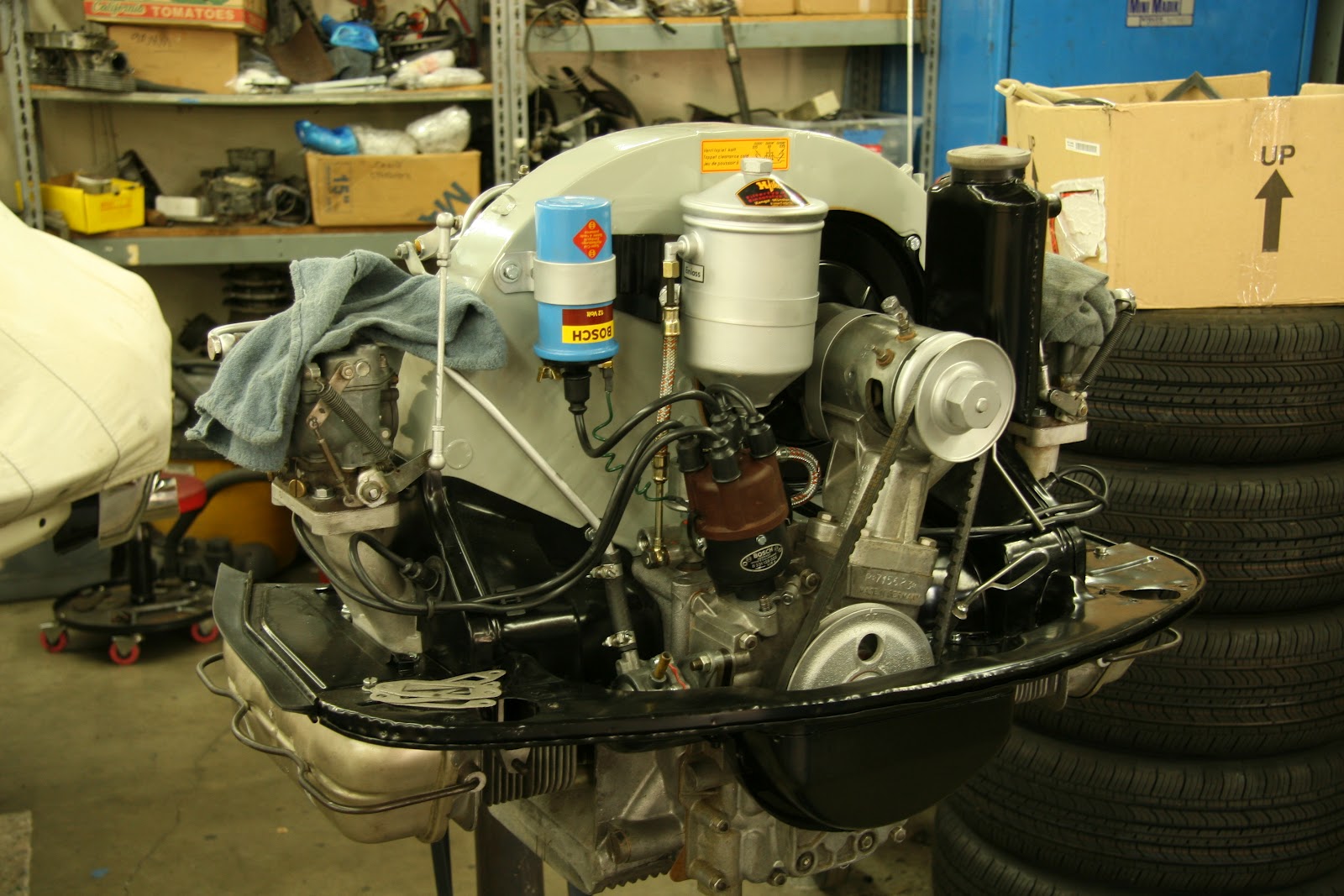
During my recent visit in the United States I've been lucky enough to stay few blocks away from Ted Blake's garage on 21st in Sacramento. I was a bit intimidated by the gorgeous array of cars always parked outside and the spotless look of the garage. I approached them asking if it was possible to take some pictures and found myself embraced by an incredibly warm welcome and endless competence. Ted Blake has been working on the brand for almost sixty years and focuses almost exclusively on 4 cylinder because "after 1965... we think they were not Porsche anymore". Six cylinders are complicated and not fun to tinker with.
I was welcomed by Carrera Panamericana veteran Paul Frame who literally dropped what he was doing and spent half an hour of his time going through each and every car and engine available in the garage. He also went to the extent of digging out two sets of photographs from his Panamericana's adventures in which, to my surprise, he was focussing mostly on how local people and kids were welcoming them rather than on racing stories. People like him are what classic car's enthusiasm is all about: passion for daring technology and history and other fellow enthusiasts alike. Him and Darrel Bailey compete regularly in the famous race with a 356A that they turned into a replica of the car driven by Salvador Lopez Chavez in 1953. The racer sports a livery of Chavez's notorious shoemaking company Canada based in Gadalajara. How appropriate is that?
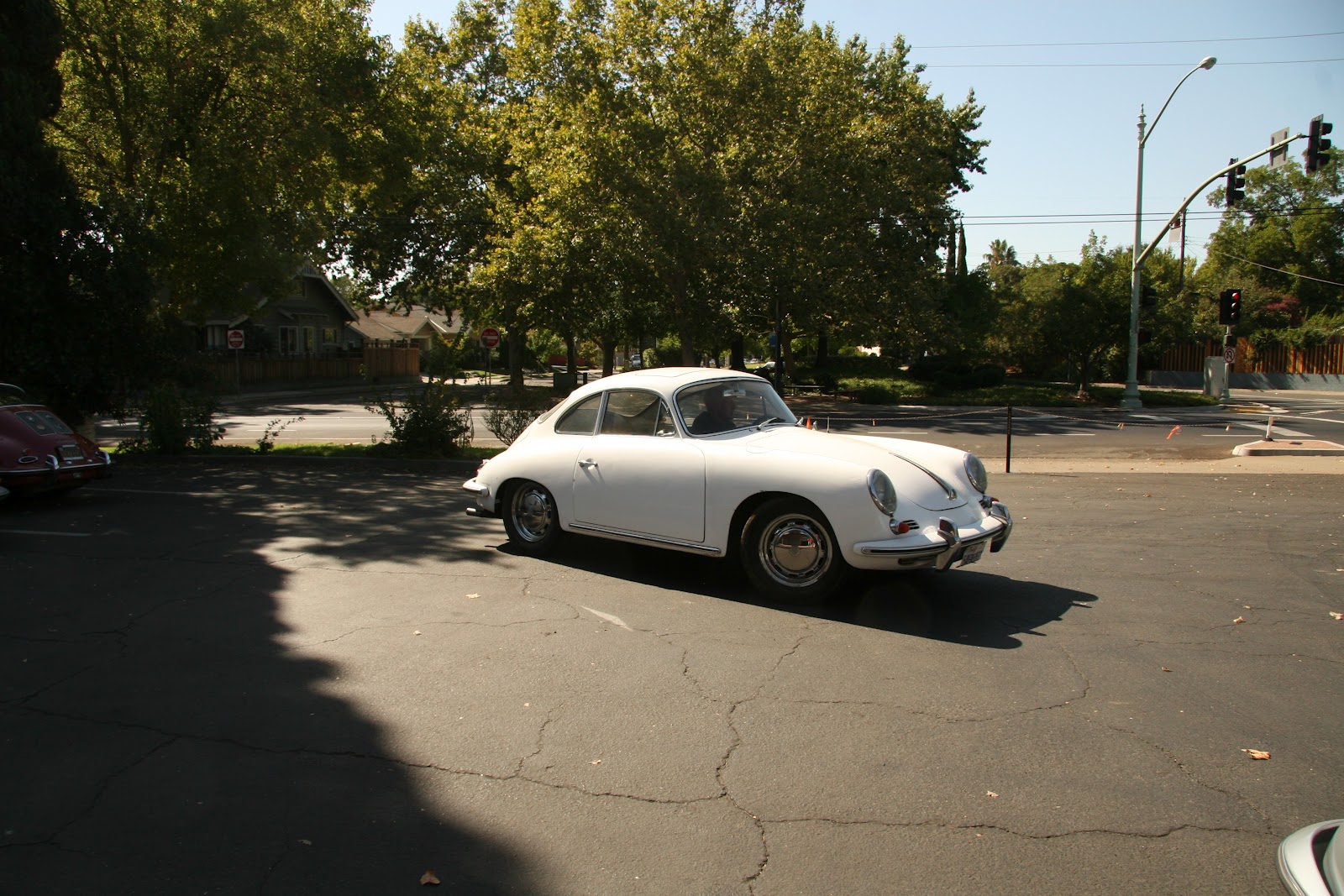
Paul kindly showed me every corner of the workshop and uncovered all the "guests" describing all the little details and tiny differences between them. In the pictures you can see a couple of SC Coupe' and also a rare and beautiful Super 90 with sunroof. The cars were all in concourse condition, even those that were still being worked on.
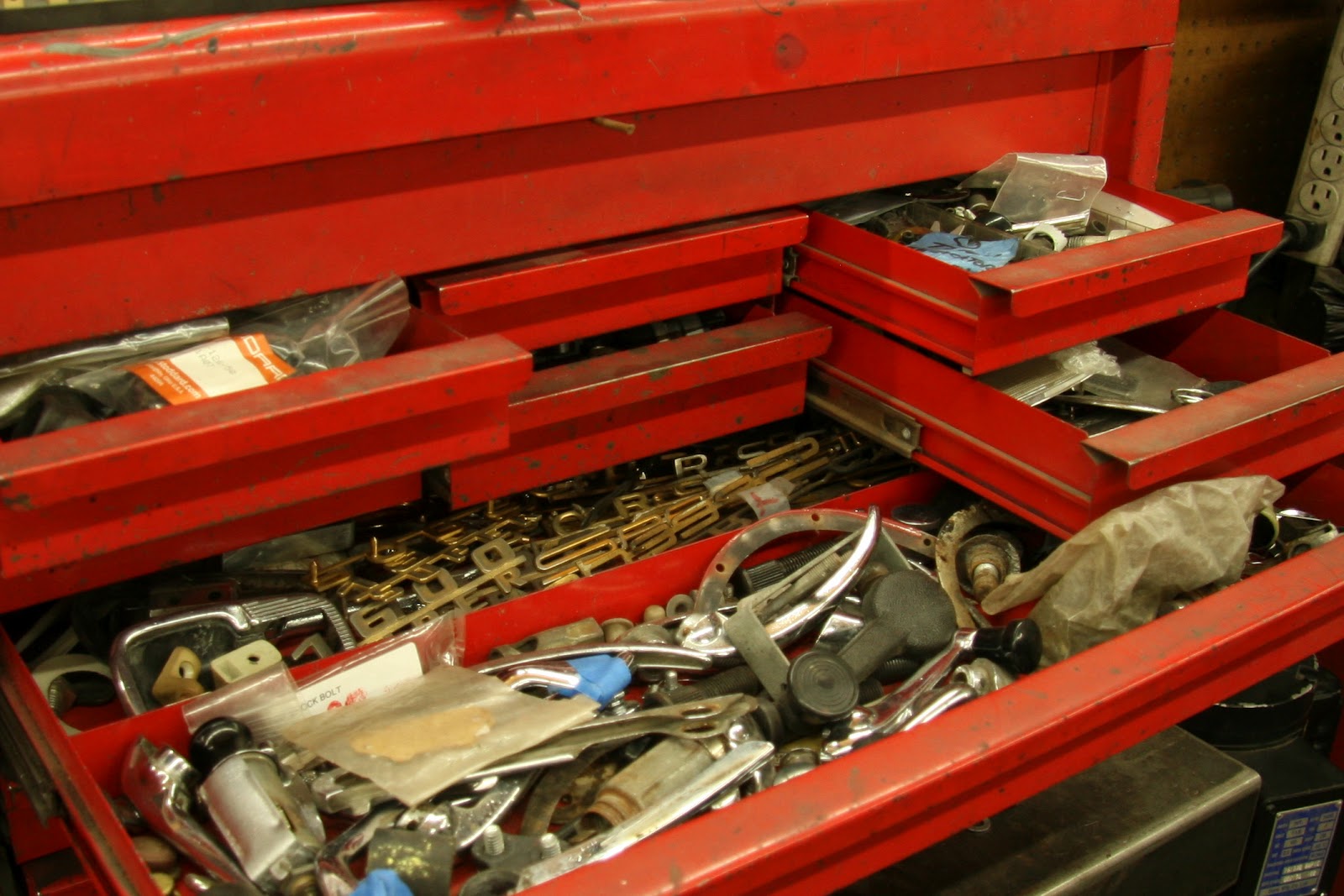
The guys don't like funny upgrades too much and they seem all the more fascinated in preserving the incredible initial design. The only upgrade I could see in that moment in the shop was the cleverly concealed disc brakes instead of the original drums. Paul also showed me the ultimate treasure of the company: a cabinet stuffed with original switches, badges and all sorts of rare parts. "Ted has been savaging them since the fifties" says Paul, a consistency that sure saved a lot of restoration projects from frightening imperfection.
If you have a 356 in needs of attention you might try Ted's garage, but to put it in their own words... "we have 10 years worth of work to deal with" at the moment. If on the other hand, you're a young lad that wants to "go to 356 school" you might be lucky here. Young, talented and hard working mechanics are apparently more rare than old badges these days, and it sure will be a waste of incredible experience when Ted will decide to retire.

Monday, 20 August 2012

Crosley at Le Mans 1951


To most people Cobra is a snake, to some is an airplane and to most of my acquaintances is one of the most revolutionary and famous race cars ever made.
Not to me. Every time I hear the word cobra my lips curve in a tiny smile and I think of a tiny little car.
I think of the legendary Crosley CoBra engine (copper brazed) that helped United States' military efforts during the Second World War and that took them back to the race tracks right after it.
I have a person to blame for all this, Old Man Foster from Crosley Kook. He is also responsible for letting me understand that quite often the fans of small race cars can be the more honest, proud and welcoming of all the vintage racing system. This is all the more true with Crosleys, cars that always inspire smiles but also had to be respected on the race track. A funny mix.
When a stock Crosley Hotshot won the index of performance at the 6hrs of Sebring in december 1950 it created a lot of confused enthusiasm. ‘Index of Performance award’ calculates the best performance for vehicles completing the race based on engine size and distance covered. An inspiring mathematical logarithm.
Phil Stiles and George Schrafft were joking about how good it could have been to have a try at the Le Mans when the latter's wife said "why don't you let Crosley build you a car?" This was not very much possible so the two decided to go for it. But time was tight so they decided to try their luck sending two letters at the same time. One to France, to the Automobile Club de l'Ouest, asking for an official entry to the 24 Hours for Crosley, the other one to Crosley factory announcing that they had been invited to the race. It worked like a charm. 
Crosley offered a Hotshot/Super Sport chassis and a very solid purposely upgraded 726 cc engine. They then went to Indianapolis to have a body created by Floyd Dryer who also took care of the upgrades on the suspensions. The body was shaped in one of the funniest creations I've ever seen, a practical toy car resembling an ancient two-man indianapolis type Duesenberg but with a midget nose. Oddly cute.
After an impressive array of adventures the delegation arrived in France and the car was promptly nicknamed "Le Biplace Torpedo". The team was composed of two drivers, one wife, one mechanic, few parts and few English men and an American soldier that came to watch but was promptly hired. The wife's support proved incredibly useful once again. Her dressing case would have been in fact scarified to carry the spares along.
The only last modifications were a bigger gas tank (helped by the Cunningh team) and more powerful lights, demanded after scrutiny. These proved to be too much for the stock alternator and a french unit was fitted. This condemned the little car's effort. The Crosley was performing incredibly well, lapping smoothly only in top gear (for the gearbox was stock and they had been warned not to use it as far as possible) when the generator started to show alarming signs. At the signal "lights on" the amperometer started to give alarm and they knew the only way to keep the charge up was to go full throttle all the way. Thing that they promptly did, creating funny situations like passing one of the quick Talbot powersliding in the "Esses". The passenger seat's cushion had been jumping up and down for the first two hours of racing and just when Stiles was making plans to throw it out of the car for good...fire broke out in the engine compartment. Using the cushion to deflect the smoke he managed to nurse the "torpedo" back to pits. The generator seized solid wrapping cables and whatever was close to it. Keeping up the Crosley spirit, decided to bypass the water pump and wizz for some extra laps. The crowd roared seeing the little car leaving the pits once more. Few laps later "Le Biplace Torpedo" was being parked on the side of the track. 40 laps of fun and glory.
Was it the end of the trip? Nope. The car was fixed and took Stiles and his wife on a lovely driving holiday across the Alps. They also decided to go and watch the Alpine Rallye contestants pass by when they remembered they still had the number 59 from the Le Mans. In pure Crosley spirit they decided to sneak between cars and pretended to be part of the race until the next village. I wish I had a picture of the marshalls trying to understand why there were two number 59s at the end of the stage.
The car now belongs to John Aibel from the Crosley Club, after a chase that lasted the better part of 15 years. It's apparently regularly shown and raced, the only modification being a 4 speed FIAT transmission mounted by Schrafft back in the day and a much more recent and needed roll bar.

Will I see this car at the Crosley meeting in September? I sure hope I will.


Monday, 13 August 2012

Ferrari Chassis - #2053GT

It could be one of the most unlucky or one of the most useful chassis of all time, to me it's one of the most desirable ever.

#2053GT crashed hard during the 1964 500km of Spa, apparently for the last time. Judging by the only two pictures I could find Francis van Lysbeth was very lucky to get out of the car in one piece and to be racing again at the 1000km of the Nurburgring few weeks later. The team was Ecurie Francorchamps and it is legitimate to think all four cars (our 2053 GT and three GTO) were more than determined to obtain a good result. Only one will manage to finish the race, 250 GTO 4153GT in fifth position.
This was the second race alone for van Lysbeth on the #2053GT but the car had been reasonably busy all its life. It was in fact its second race for 1964 (2nd place best result) after 7 total races in 1963 in which it obtained a 3rd, a 4th and a 5th placement. 1962 was indeed the beginning of a new life for #2053GT after a nasty accident at the 1000km of the Nurburgring almost got it written off. At the time of the accident in fact the car was wearing already its second (possibly third) "dress" and it was to be changed yet again.
The car left the factory line in early 1960 as a 250SWB but it was retained by Ferrari as "muletto" or development car. Some were led to think that this very chassis was Enzo Ferrari's and subsequently Giotto Bizzarrini's personal car but in reality such car would have been #0523 GT. According to other sources it might have also been the mysterious "Anastasia" GTO development mule.
What most trustworthy Ferrari historians proved is that our car started as a Boano (hence the confusion with Bizzarrini's) and it was sold in early 1960 as SWB to Milan's Scuderia St. Ambroeus, to the name of Casimiro Toselli that raced it extensively and successfully the whole year before trading it back to the factory. As everybody knows 1961 is a pivotal year for Ferrari and the GTO development and not much is known about what happened during this time to #0523 GT. It's known that the car was by then silver with wide red longitudinal stripe and there's photographic evidence of it at the paddock of the 1961 Le Mans possibly taken there by works driver Willy Mairesse. By the end of the year Stirling Moss himself would test some experimental modifications at Monza (hence the theory about the car being "Anastasia" by then) until it was finally sold to Ecurie Francorchamps after being upgraded with 6 Weber 38 DCN carburetors.
The car raced 5 times in 1962, most notably with Jacques Swaters taking it to victory twice, until the fateful 1000km of the Nurburgring in may saw the car damaged almost beyond repair. 

At the time it was common to use this kind of chances to give the remains to italian coachbuilders which then had the chance to give us some of the most amazing creatures we still admire today. I'm ever so thankful that this chance was given to Drogo.
Born in Vignale Monferrato, 45 minutes drive south of Turin, in 1936, Piero Drogo was a former racing driver that worked as a mechanic at Stanguellini after his family returned to Italy after having emigrated in Venezuela during the war. After having established his own Carrozzeria Sports Cars in Modena he started taking orders from private clients mostly arriving with Ferrari in need of a new body. This was a time very likely to be considered the true renaissance of motor car and is incredible to think that few blocks away there used to be coachbuilders such as Drogo, Neri & Bonacini and Scaglietti. Most of them creating these cars without ever making drawing of them. This sort of neighborhood also explains another common misconception, the creation of the notorious #2819 GT breadvan, created by "beaters" from Neri & Bonacini and not Drogo as usually stated.
On #0523 GT Drogo created one of the loudest and in my opinion most beautiful designs ever to dress a 250SWB. The signature pointy nose, the elongated figure and the tight fit of the body on the chassis creates an outrageous wave that gracefully and violently wraps the rear section of the car and the rear arches. 
It sure is painful to see the pictures of the car violently smashes after rolling over and the canopy brutally removed to take van Lysbeth out of the car on that fateful 17th of May of 1964 at Spa.

It is not certain where #0523GT is now. Some say that it was rebodied as SWB but many support the theory that the car was never to be rebuilt again and it may still be somewhere in the Ecurie Francorchamps belongings. Unfortunately the value of a SWB these days makes the second theory quite unlikely but I do hope one day someone will return the car to its unique lines.
Many hours of research didn't give me any lead in finding the position of the car today, any suggestion or tip would be extremely appreciated.


Friday, 10 August 2012

Time for Auction!

This August is definitely a great month for Classic Cars Auctions. Some of the most amazing cars in history will go under the hammer and I sure regret not being able to witness in person the exciting last moments of ownership for those selling them.

The majestic and unique Manta Bizzarrini is set to trade hands in Pebble Beach at Gooding and Company's auction on the 18th and 19th. Very first design of the newly founded firm, the Manta arguably marks the appearance of the wedge style and "the seventies" in car design. Starting from the innovative frame of the Bizzarrini P538 the car seems to wipe out all the designs made before with an uncompromising 15 degree windshield, three seats with the driver in the central position and its outrageous color scheme. The estimate seats comfortably between 1.3 and 1.5 million dollars. I sure hope this car more luck than what happened to the even more revolutionary Lancia Stratos HF which missed the lower estimate shy of €200.000 last summer.
Find here some pictures I took some years back at the Goodwood Festival of Speed.


The Manta will be in great company, the catalogue also offers a striking 1962 Ferrari 400 Superamerica Coupe Aerodinamico ($1,750,000 - $2,500,000), 1957 Ferrari 500 TRC ($3,750,000 - $4,500,000) and three famous prototypes like the 1970 Monteverdi HAI 450 SS ($600,000 - $800,000), 1964 Ford GT40 ($5,000,000 - $7,000,000) and the 1957 Ferrari 250 GT LWB California Spider ($6,000,000 - $8,000,000).
My personal favourites probably being the 1955 Maserati A6G/2000 Berlinetta ($1,500,000 - $2,000,000) and the almost perfect 1959 Lancia Flaminia Sport ($375,000 - $450,000).
Click HERE to take a look at the whole catalogue.
If you were impressed by the offer of Gooding and Company then you should not be disappointed by RM Auctions, except for the fact that they are offering two Auctions this month alone! On the 17th and 18th in Monterey they will offer a frankly striking array of vehicles. It is very hard for me not to publish here most of the catalogue. One of the pure gems is the 1955 Ferrari 410s Berlinetta, the beauty and the beast itself. A car rarely seen in meetings and events and one of the most beautiful shapes ever conceived by Scaglietti.
Also in the catalogue no less than 3 true everlasting icons of car racing history such as the 1971 Porsche 917/10 Spyder Can-Am ($2,900,000-$3,500,000), the "Icon" itself 1968 Ford GT40 Gulf/Mirage Lightweight that also served as camera car in the legendary "Le Mans" movie and the 1987 Porsche 962 IMSA Camel GT ($1,200,000-$1,600,000).
Porsche is also well represented by the 1981 Porsche 935 JLP-3 IMSA ($1,300,000-$1,800,000) and no less that the actual factory works prototype of the 1963 Porsche 904/6 Carrera GTS ($1,800,000-$2,200,000).
Last but not least there's the novelty of Virgil Exner's 1960 Plymouth XNR concept car. Admittedly not one of my favourite cars. I find its shapes too "cartoonesque" for my tastes. But then again... how often does it happen to see such a famous unique car trading hands?
Find here some of the videos RM produced to present this particular auction.
It's common for these auction houses to offer for sale such incredible vehicles and to reach equally incredible bids. That's why the real surprise of the month is RM's auction in Denmark, presenting the Aalholm collection on the 12th of August featuring more than 175 motor cars, formerly part of the Automobil Museum. All lots will be presented without reserve and in my opinion, at very conservative estimates. Possibly because most of the cars are not restored to RM's incredible usual level or possibly in an attempt to try and attract a wider audience. Whatever the reason, there will sure be some nice bidding action and some smiley faces at the end of the day.
The museum's offer stretches from a 1958 Trojan Cabin Scooter with a high estimate at £740.31 (really??) to an uber cool 1926 Citroën Kegresse Half-Track that is expected to go for as little as  £2,300.
The queen of the auction in my opinion will be the 1954 Arnott Sports, Arnott's only Lea Francis (push-rod - twin cams high in block) powered Sports from a production of seven cars. Miss Daphne Arnott founded the make in London in 1951 and produced cars for roughly 6 years. It was a brave attempt and she also managed to put a car on the grid of the 1955 and '57 Le Mans 24 Heures, where it was stopped by technical failures. This is truly a nice piece of car and the estimate of 2,300 to 3,900 GBP is to my eye,  hard to believe.
Go to RM's website for all the info you may need and don't forget to subscribe to their twitter account for a live feed of the auctions!

Sunday, 5 August 2012

Italdesign Aztec on Ebay!

I remember seeing the Aztec at the Turin Motor Show back in 1988. Admittedly I've never been a big fan of its shapes but I've always seen it as a statement more than a work of art. 
Designed to celebrate the 20th Anniversary of Giugiaro house (then Italdesign), the design is a modular base for three different coach styles being Asgard, Aspid and Aztec, respectively a people carrier, a sort of shooting brake and an innovative barchetta.
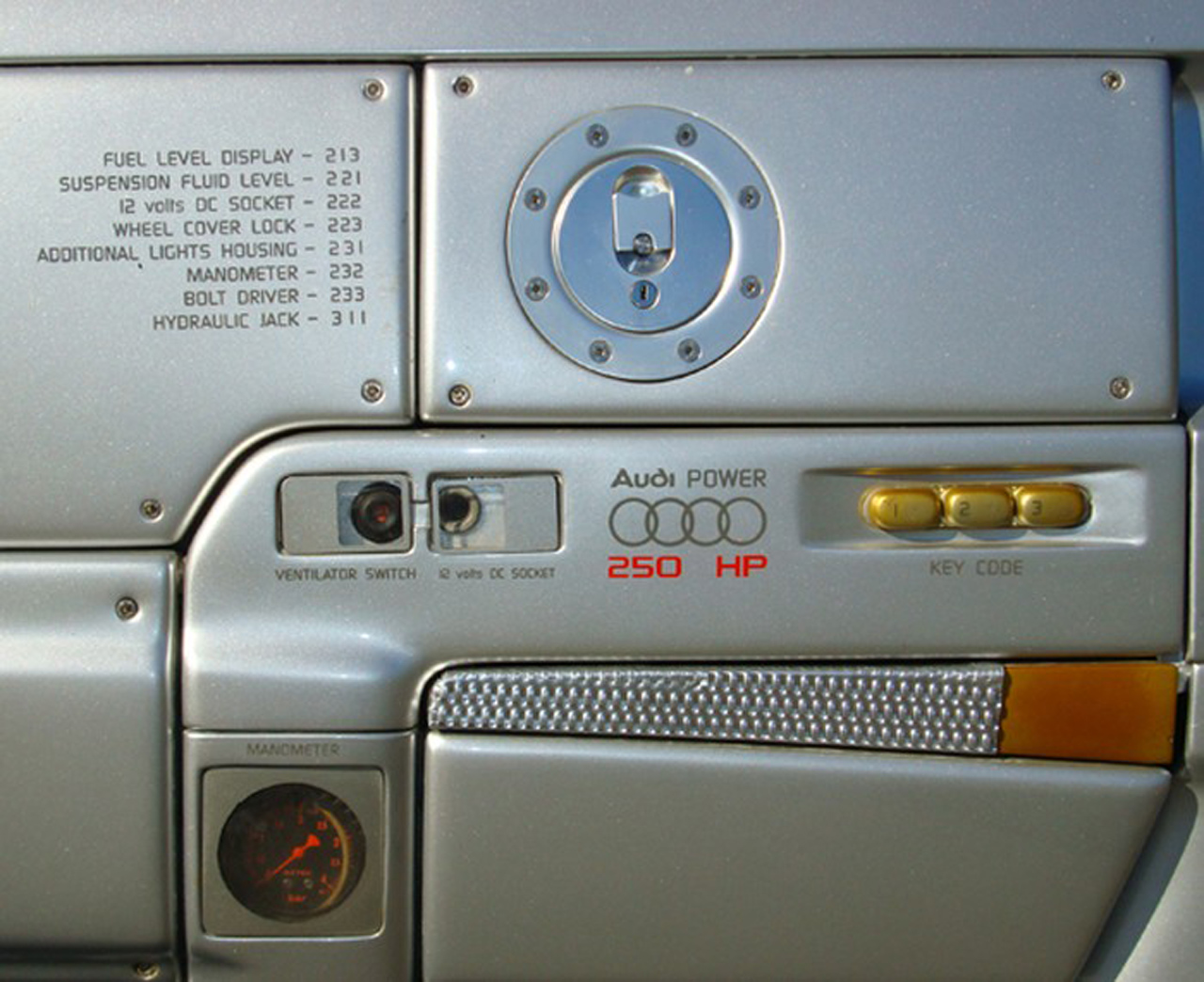
Sketches demonstrate that the designer has been fantasising about a dual cockpit barchetta since the late fifties but only managed to finally materialise his view in this daring vehicle. Two streamlined open canopies wrap around driver and passenger that can communicate via a headset and microphone. This is only one of the gizmos that were included in the design, most notably some futuristic control panels on the flares that should have controlled various services via three digit codes. For the power unit they opted for the rally and pikes peak champion Audi 5 cylinder spiced up by a turbo, connected to the notorious Lancia Delta Integrale 4WD distribution. The car was supposed to be only a stepstone but Japanese firm Compakt decided to start a production line for 250 cars. It is unclear how many were actually produced, some say 50, some 25 and some others only 18. All the gizmos were dropped with the exception of the inboard communication system but very few details were changed from the original prototypes, most notably the tail lights.
The first production car performed some demonstrative laps at the 1992 Monaco Grand Prix and featured in an Industrial design exhibition at the Musée Georges Pompidou in Paris.
I have to admit it did hurt to find one in such bad state for sale on Ebay. This car was allegedly found in very poor state in a barn with the engine seized. I don't understand the choice of upgrading the engine from the 2.2 Turbo to a newer 3.7 for this will seriously affect the originality of the vehicle and sure I hope the new owner will return the paint to the original silver. On the bright side the sale includes the  original moulds for the fiberglass body panels, supporting the thesis that this chassis numbered 18 is actually the last ever made.  
The price tag when new was a whopping £750.000 and apparently a good example traded hands in the past years for £250.000. Coy's estimate for an almost complete un-numbered and incomplete black Aztec in 2010 was €45000 - €55000. The auction starts at £15.000 and I hope to see some bidding auction to discover where the reserve has been placed. 
Click HERE to follow the Auction.